Build log
Clustra
Most shopping tools compare prices, then hand you to the retailer. Clustra is built to own the part nobody does: the purchase itself.
- Year
- 2026
- Role
- Solo — idea, design, build
- Type
- AI buying agent
- Status
- In progress
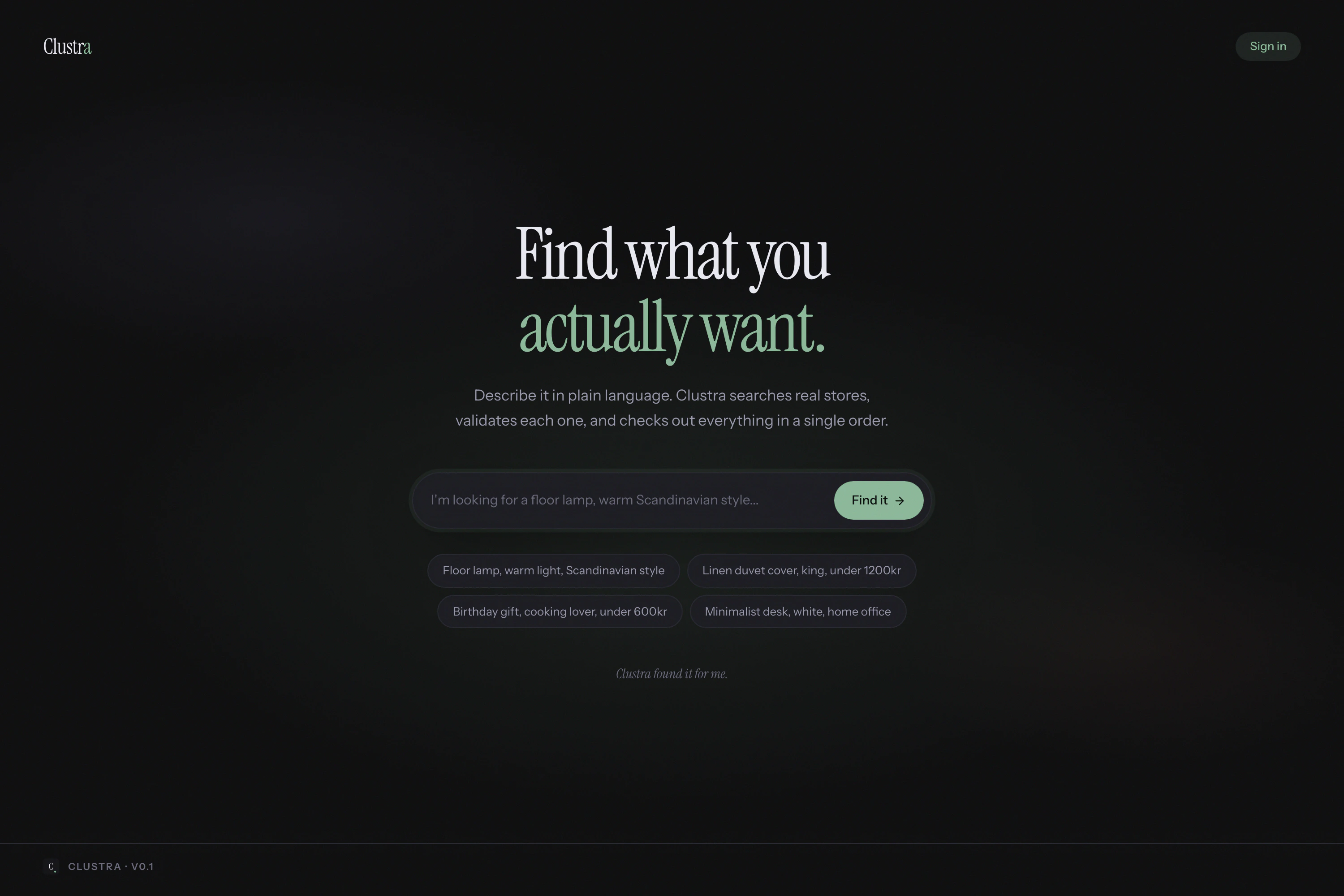
Centralize the search, own the purchase — one checkout instead of a dozen.
Prisjakt and Klarna compare or embed shops, but the moment you actually buy you’re on the retailer’s own site, placing separate orders one at a time. With Clustra you describe what you want, AI curates the most relevant products across retailers, you place one order, and agents buy each item from each shop.
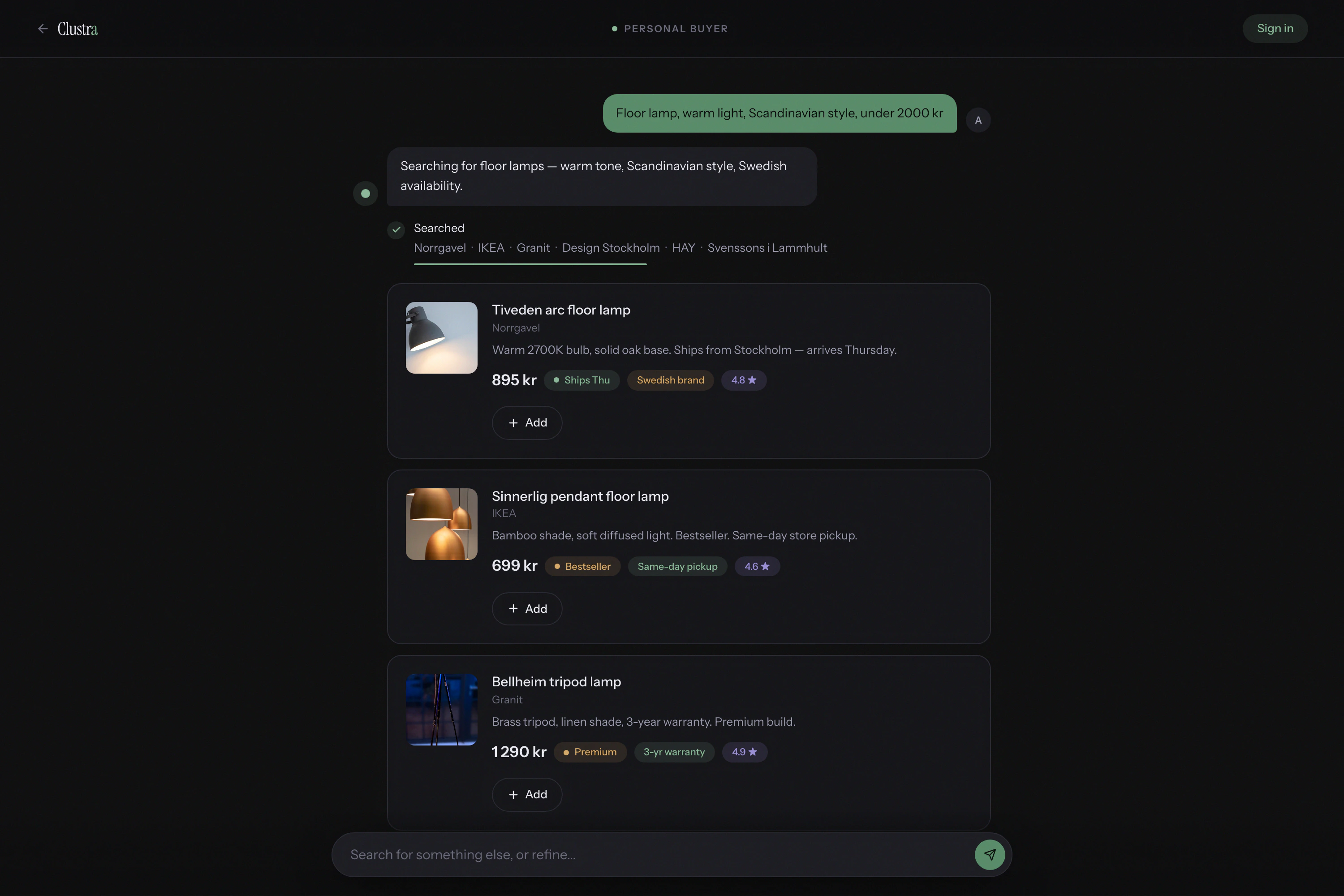
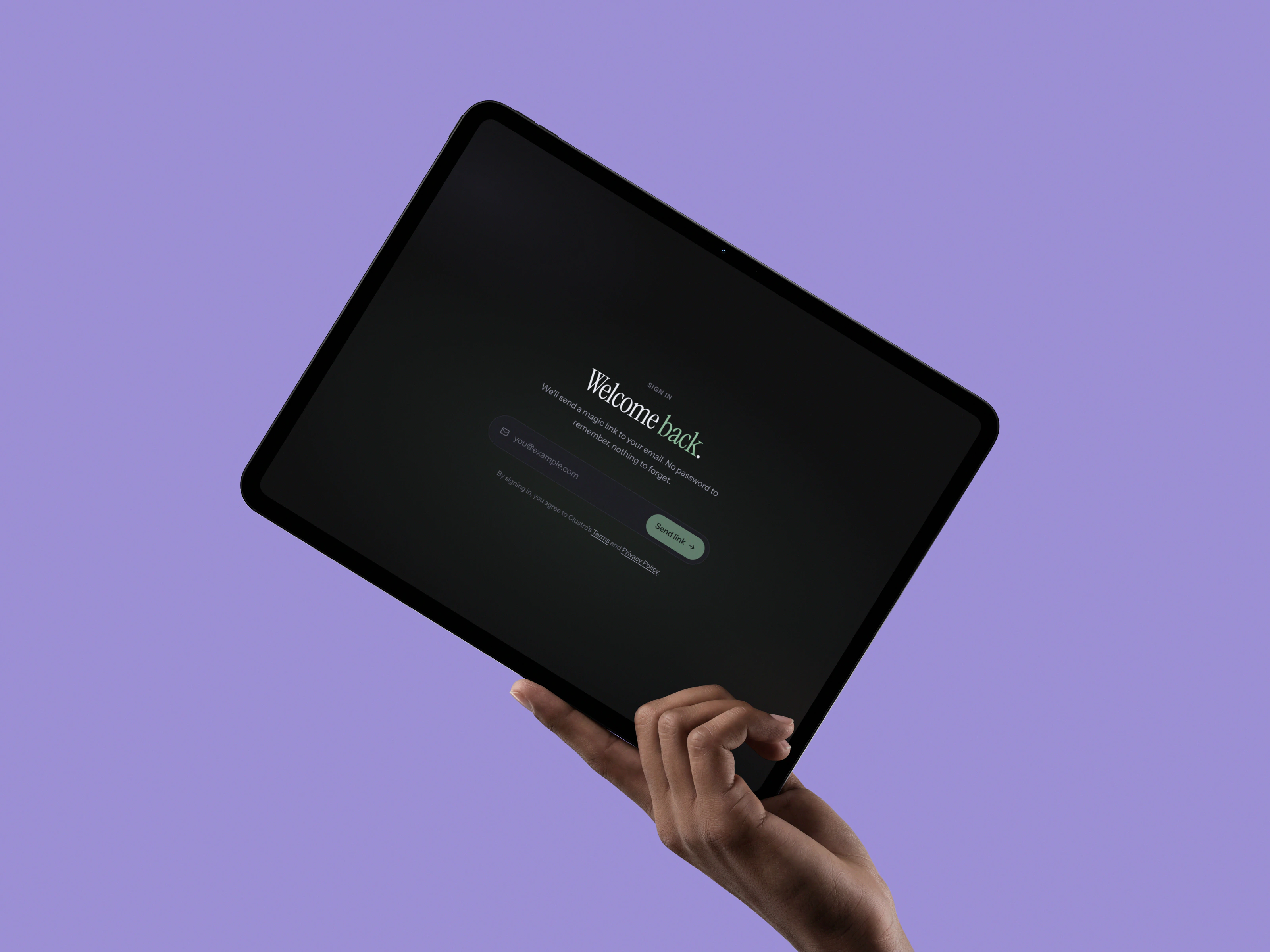
A working, account-based product — the full consumer journey, end to end.
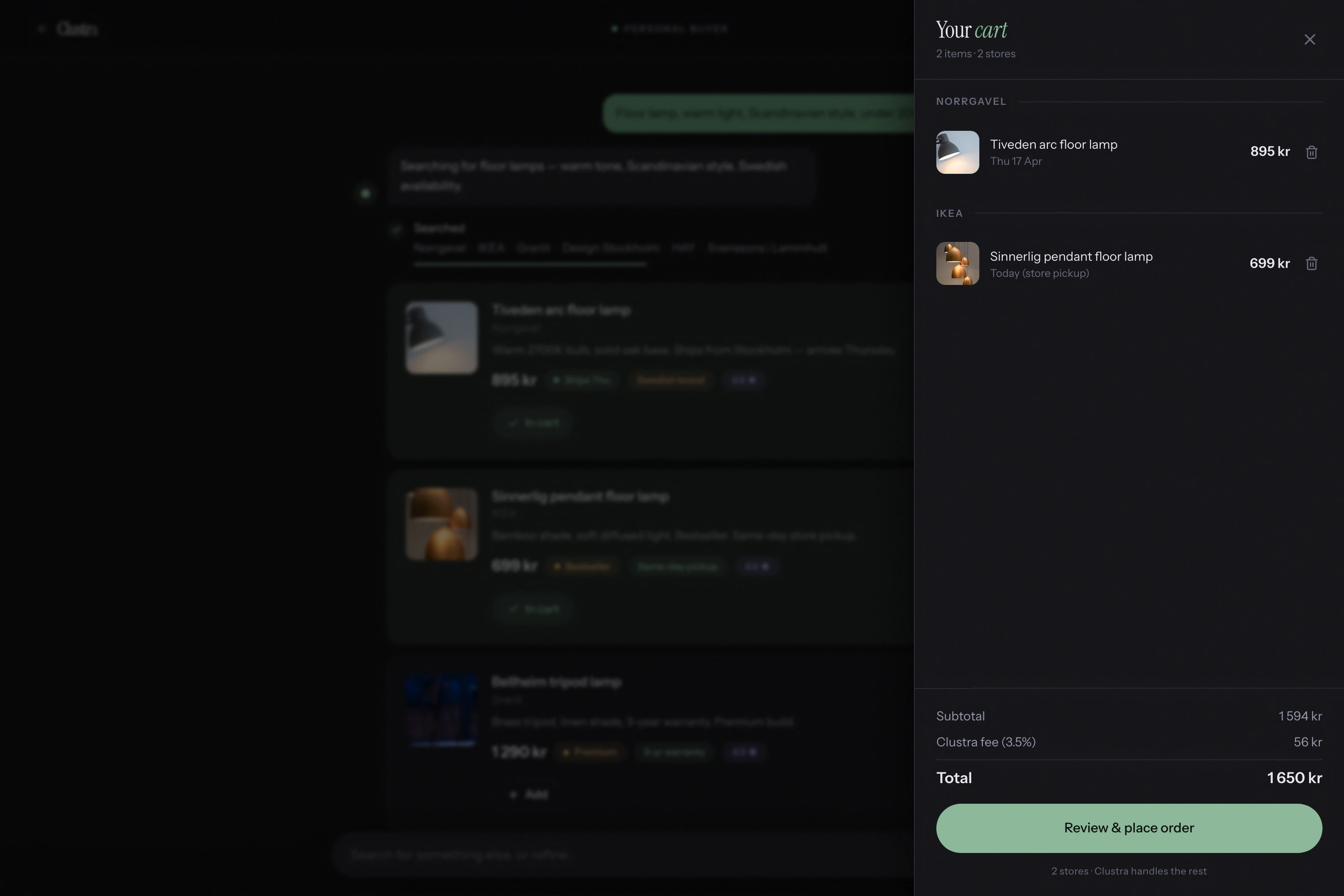
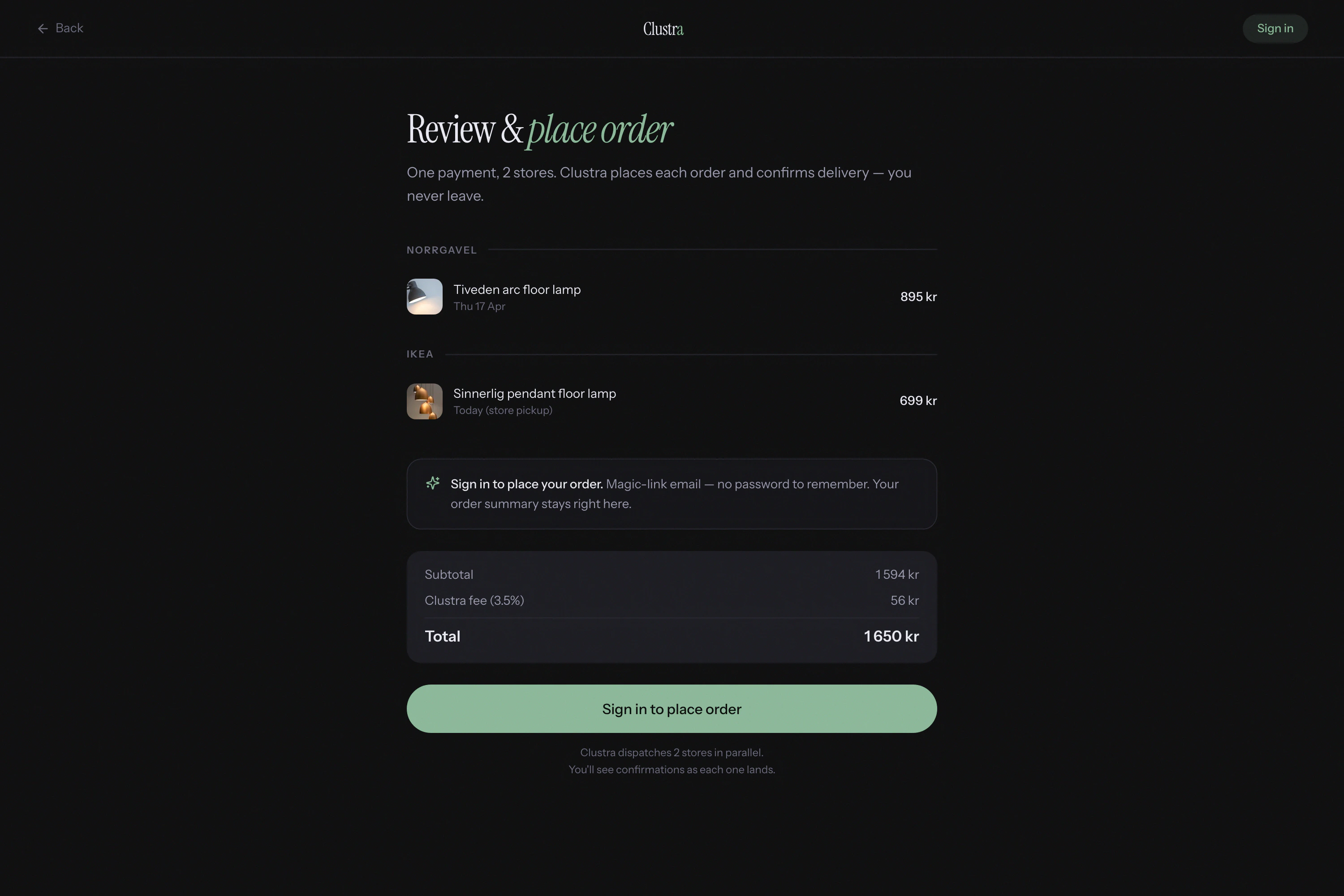
Accounts, payment details saved securely in a keychain, and a Stripe integration (test environment) that catches every order placed through the flow. To be straight about scope: the AI dispatch and curation run on mock data — the flow is real and complete; the AI execution layer is a prototype, not live.
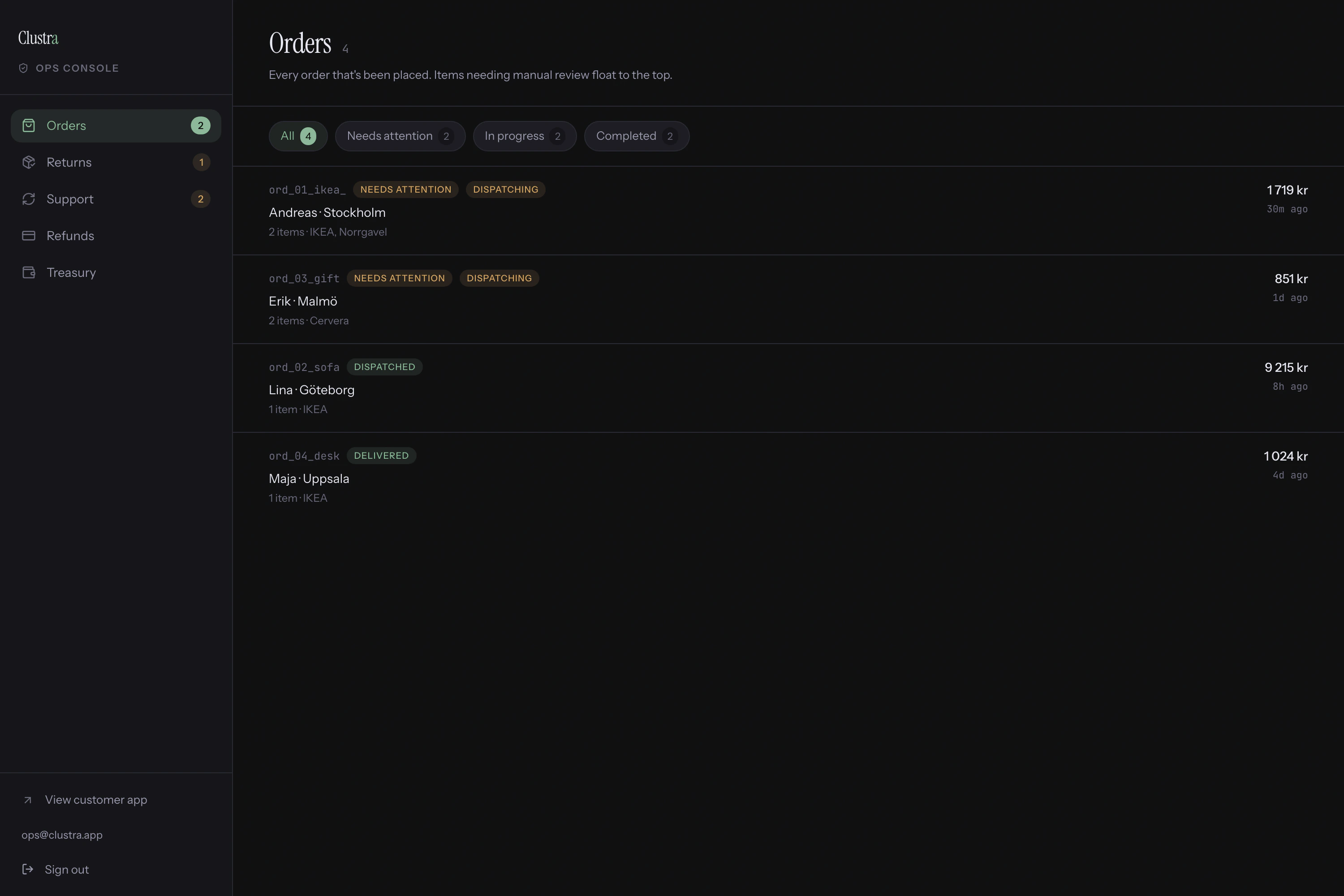
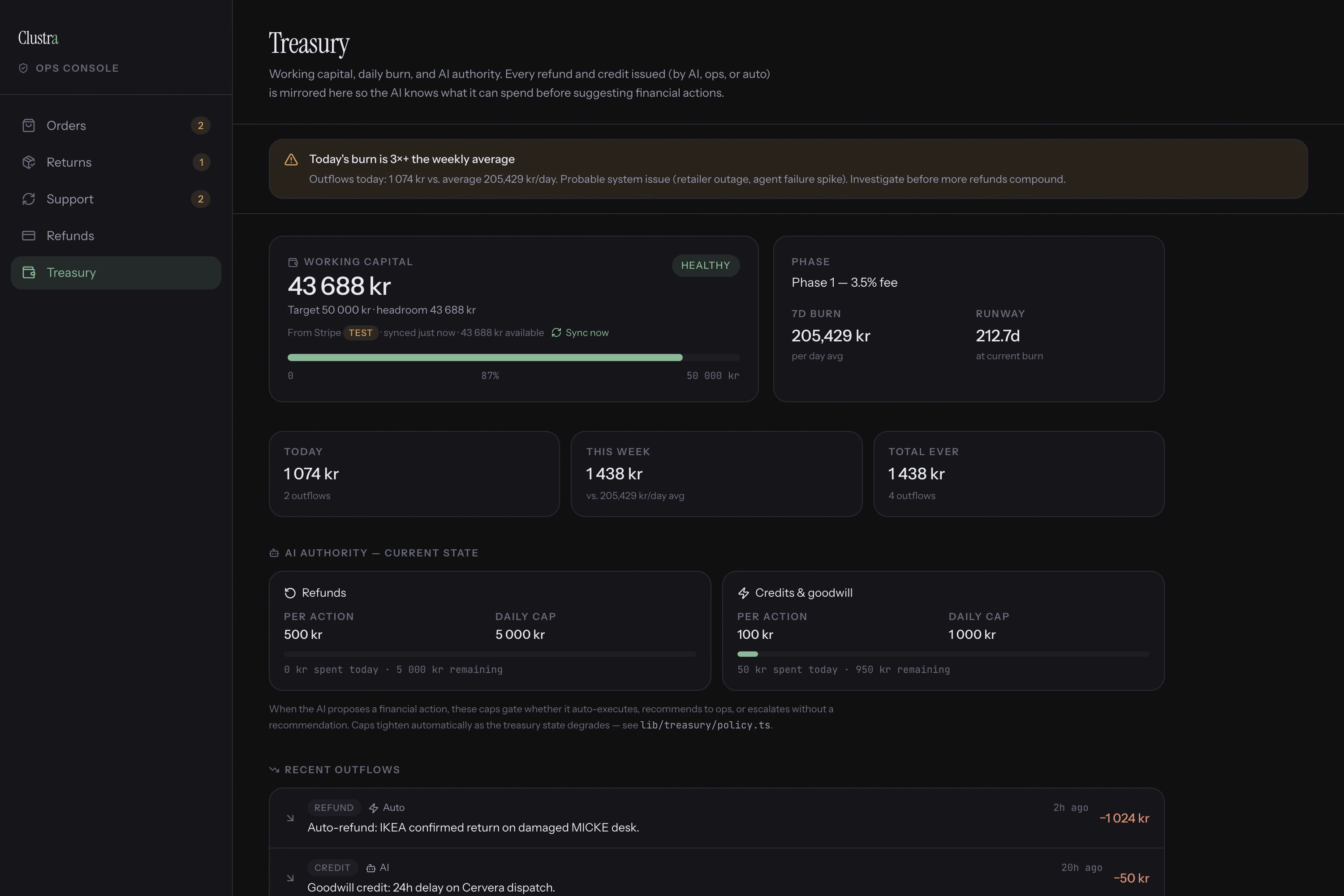
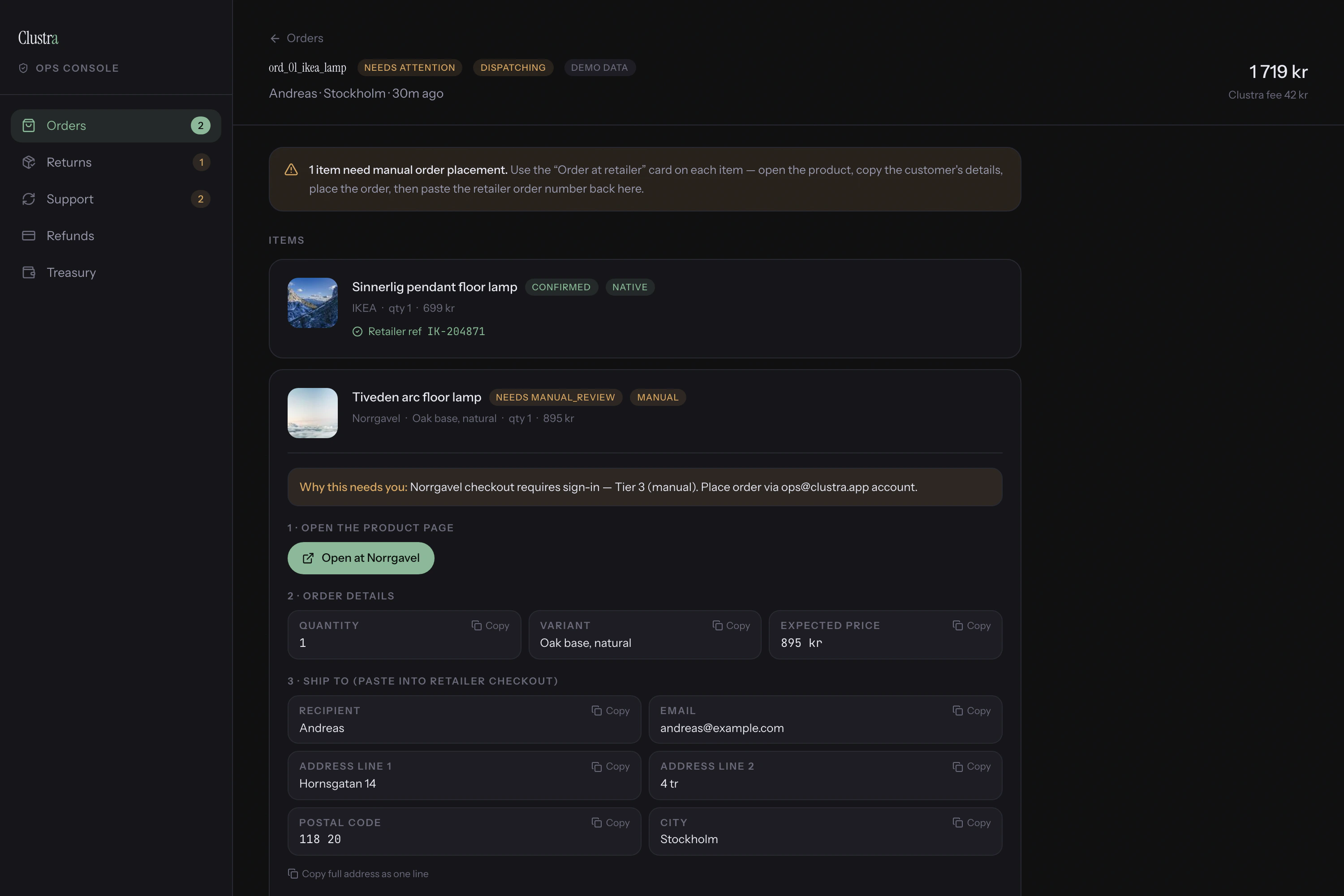
I designed and built the ops dashboard that actually runs the business.
It tracks every order and flags whether AI can complete the purchase or a human needs to step in, tracks company liquidity, and surfaces returns and support — built to run on AI by default, with people on the edge cases. Anyone can design a checkout screen; designing the system that decides what AI handles and how money and exceptions move is product and systems design, not UI.
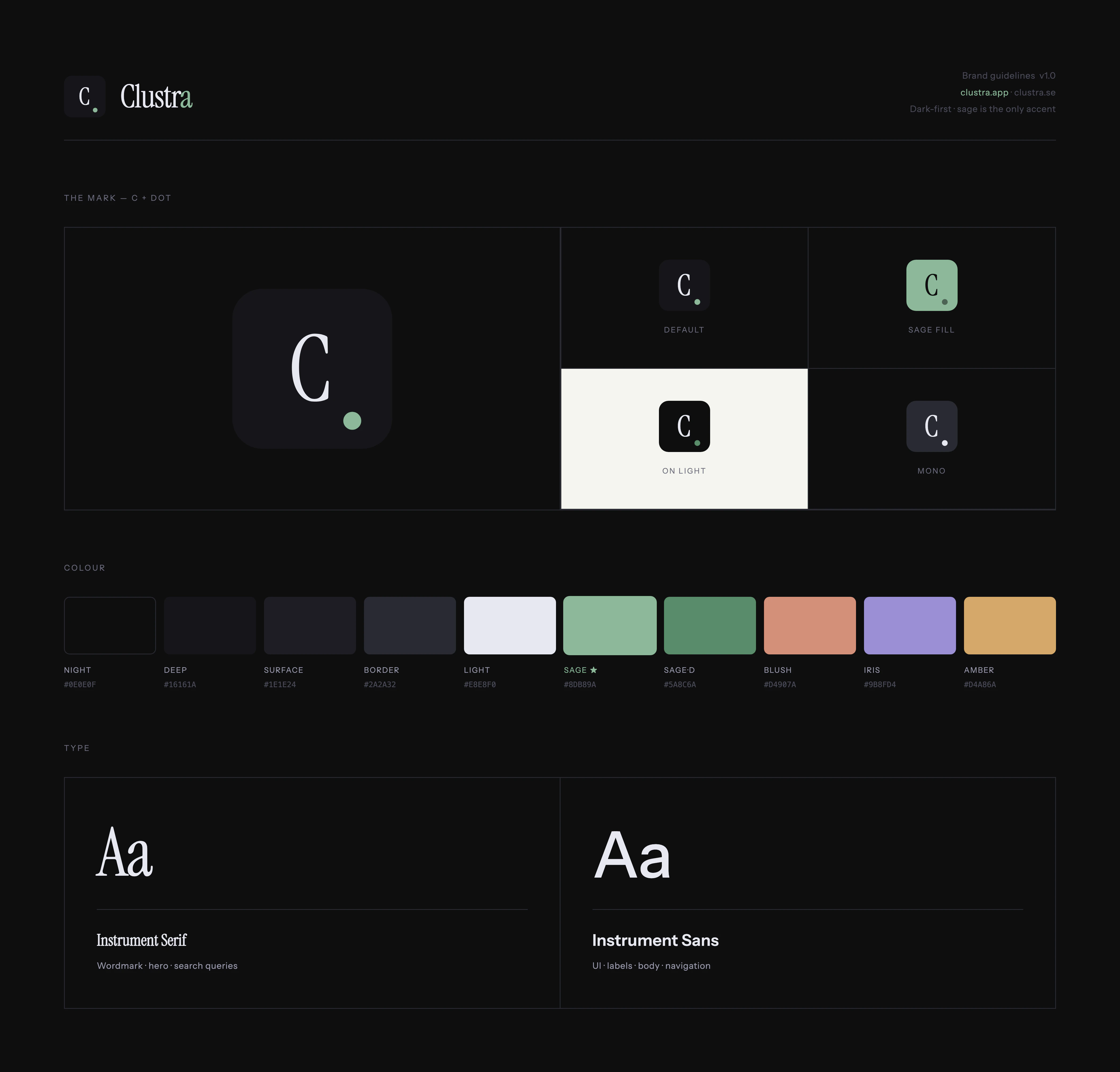
The brand kit went in the repo as a gate every build had to pass.
I made Claude Code read the visual identity before it touched any code, so the design system was a gate, not a doc that drifts — what kept a fast one-person build from sliding into default AI UI. I signed off on every UI decision, and we ran the unit economics together before going further.
Solo — idea, product strategy, brand, design direction, and the ops system. Built with Claude Code under my direction, and I ran the unit economics myself.
Next
Centra